7 Reasons AI will Never Kill Film Photography
AI image generation is becoming more realistic every few months. Soon it will be nearly impossible to tell an AI generated image from a real photograph. But AI will never kill film photography. In fact, it will only make it better.
I was purchasing a record at an antique store the other day (Don Ho’ Hawaii Songs) when an older man said to me, “I remember when CD’s came out. We all thought the records were dead. You couldn’t give them away back then.”
Film photographers experienced the same thing in the early 2000s when digital cameras were on the rise. Free, nearly limitless photos compared to the cost of film. That’s a hard one to beat.
With AI image generation becoming more realistic at such an incredible pace, it will be nearly impossible to tell an AI generated image from a real photograph. But AI will never kill film photography. In fact, it will only make it better.
Here are 7 reasons why I believe film photography will stand the test of time and why AI will only make it better.
1. Film photography is more about the photographer’s experience than the final image
I can already hear people saying, “Hang on a second!” Of course film photographers care about the photo, but ask any film photographer why they shoot film and you’ll never hear them say: “When I absolutely must nail the shot, I shoot film.”
The reason we shoot film is for the experience, and in many cases, the more analog the better.
Film slows us down, makes shots intentional, and involves us more in the process. It’s actually quite inefficient (not to mention expensive) and yet it still persists even in this digital age.
2. AI generates images. Humans take photos.
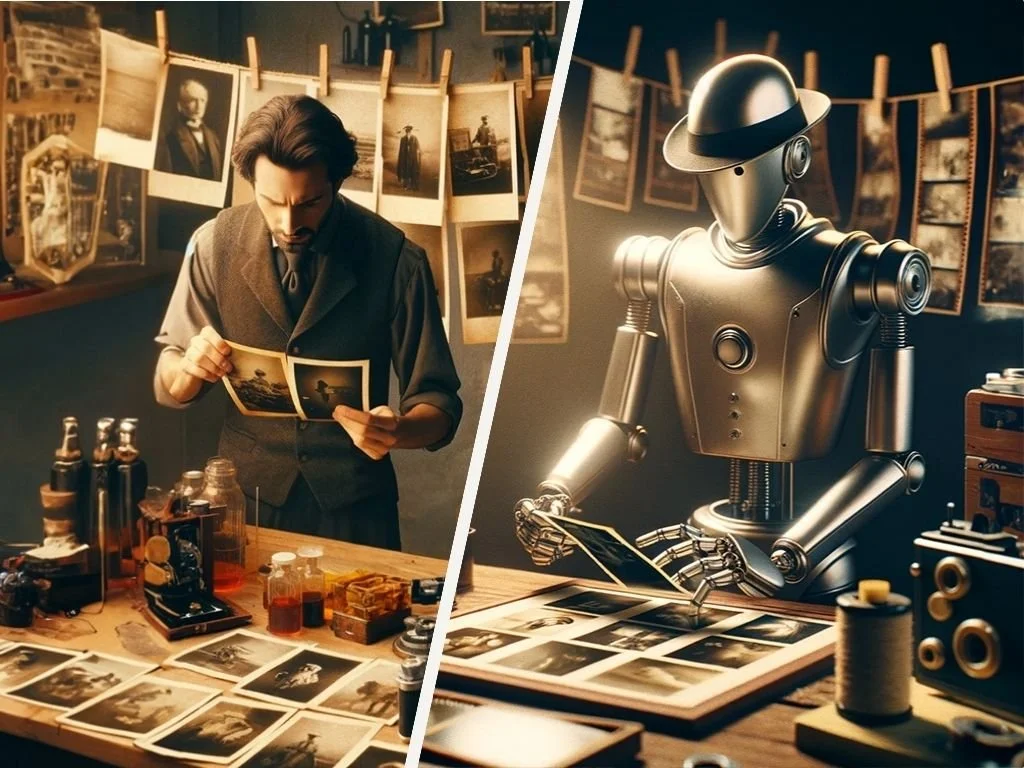
There may come a time in the future, when, like the image for this article suggests, robots also take photos on film. But for the time being, AI will generate images from its vast stores of information, never leaving the confines of its digital habitat. Humans, on the other hand, will walk to places, see sights, take in the feeling of a foggy morning, and capture those memories in a photograph.
There is something which goes beyond an image, however realistic it may be, that we long to connect to. It’s the experience of capturing, of being there, and of putting other aspects of life on hold to make that moment a reality.
3. Every film photo is unique and humans love unique.
Like a fingerprint, a film photo is unique in its own way. Two photographers standing next to one another can take the same shot on the same film and equipment and the photos will each be unique.
The light-sensitive crystals in the film will react differently and while they may capture the same scene, they will each have their own fingerprint. But beyond the technical differences in each photo, each photo is unique because the entire experience is unique. You were there at that moment, capturing that shot.
How many of us have seen a photo that another photographer captured and thought to ourselves, “Man, I wish I had been there to see that!” We know that it is one of a kind and this adds to the excitement we feel for the photos we share and see.
4. AI will make film better (eventually)
The AI we have access to today is very collaborative. If you know a bit about the subject you’re working on, it’s extremely helpful. But, you can’t simply tell it to solve some problem and come back a week later with a solution.
At least, not yet.
But this is the promise of the AI of the future.
“AI, find a cure for this cancer.”
“AI, design a new type of muffler for my old van.”
“AI, bring back Kodachrome.”
You get the idea. At some point AI will make different types of film for us to use. Can you imagine a Polaroid with the clarity of a medium format film?
5. Humans need analog
Seriously. We don’t just like analog as some kind of kitschy throwback that will eventually fade away as most fads do. We need it. We are realizing this more and more. The more we automate and make easy, the more depression and anxiety we have in our society.
We need to be tactile. We need to load the film, experience the shutter click, and decide what that last frame will be on our roll of 36.
6. Film photography creates community
An interest in photography in general creates a community, sure, but film photographers are a rarer breed and we recognize that in each other.
I’ve experienced first hand the difference between meeting someone who only shoots digital vs someone who shoots film.
There are a few things all photographers have in common:
We are always thinking about a different camera to buy
We have a list of places we want to travel to photograph
But there is a spark that I’ve noticed in film photographers that seems to be missing from our digital brethren. It’s a kind of childish delight. There’s no pretention with it and plenty of optimism, curiosity, and enthusiasm for one another.
7. Film challenges us to be better photographers
Film cameras, especially the earlier, manual models, put the control back into the hands of the photographer. Missed focus? That’s on us. Underexposed? That’s us again.
There’s nothing like getting a roll of film developed a few weeks after shooting and realizing you totally missed the shot you most wanted to get right.
As we get better with film photography, we take more pride in our capabilities to be there and get the shot. We also take more pride in the final photos because we know the skill that went into it.
Final Thoughts
Currently, AI is very collaborative and rather than taking jobs it is actually making us more productive. I have no doubt that AI will be used heavily in the media industry but it will never replace the very human experience of capturing our memories onto film.
Analog is the revolution we need and AI will only make us realize that more than ever.

(Accidentally) Discovering Your Photography Style
Every photographer wants to have a unique style of composition and editing that is unmistakably “theirs”. But is this still possible with so many photos being created and so much talent on display?
Every photographer wants to have a unique style of composition and editing that is unmistakably “theirs”. In some ways, this should be easier today than ever before. We have more tools for editing, more cameras for getting the shot, and even the ability to travel and get those epic pics that photographers only dreamed of a few decades ago. But there is also more competition than ever. Nearly everyone has the ability to take photos, and modern apps make it easier than ever to take a novice’s pic and make it look pretty good.
On top of this, we’re inundated with photos of all kinds. We rarely take the time to study the greats — even though we should — and so our biggest influences become the trendy photos pushed by social media, instead of the ones that really move us.
With all of these headwinds fighting against us, how can we discover our own unique style?
Well, for me, it happened somewhat accidentally.
Let’s Start from the Beginning
I’m something of a new photographer. While I’ve been shooting since 2016, there are a lot of photogs out there that have been going for several decades. I share this bit of insight to let you know that while I feel happy with the style I’ve discovered, it may change as time goes on.
My photography journey started in earnest in 2016. I bought a Canon T5i and began taking product photos for our, then start-up, Rustic & Main. I didn’t know what I was doing, but the camera took the best photos I had ever taken. It was probably a year later that I discovered this thing called Adobe Lightroom as well as Peter McKinnon and his YouTube editing arsenal. I was hooked! Finally, my pictures started to have some life to them.
But it would be several more years until I found “my” style.
A First of the Roll Accident

A #FirstOfTheRoll at Yellowstone Lake, October 2023
For those not familiar with film photography, there is something many of film photogs appreciate — the first frame on a roll of film They don’t always turn out great, which is part of the fun. Often, we’re just trying to advance the roll to the true first frame. But sometimes you end up with a cool half-exposed image like the one above.
The image you see above of Yellowstone Lake is unedited. The colors are a result of underexposure for the shot, plus some overexposure of light (that’s the white side) when the film was loaded.
The result just happened to be this blue-green, uber-vintage vibe that stopped me in my tracks.
I had well over 200 shots on film from a trip out West that I was editing and, to be honest, I wasn’t crazy about them. The composition was good, but something was missing. I just couldn’t feel the shots the way I wanted to. The way this accidental shot made me feel.
Feeling First. Color Second.
One of the issues I had early on as a photographer was trying to find one style to fit all of my photos. Or better yet, one preset that I could use for everything. But alas, different scenes demanded different editing to “feel” right.
The same thing happened when I came across this accidental film frame. For this scene, I loved the green & blue cast that this shot had, but rather than focusing on the color, what I really loved was the feeling associated with it.
I got this feeling of nostalgia and a dream of a distant land. It’s the same way I feel when I see a true vintage photo and think, “Man, it would have been awesome to be there and see that first hand.”
How My Editing Process Changed
The next frame on that roll was properly exposed, but I edited the colors to match the accidental shot above. Here are how my edits turned out.


While I still like to have similar color themes for a scene, I am much less concerned about how much they match and more about how each individual shot impacts me.
I found that I really like color, more than I wanted to admit in the past (I don’t know why), but I like very vintage and natural tones.
Here is an example of how other shots from the trip turned out.


Different, yet Similar.
To me, this is what makes a “style”. The photographer can snap scenes from different locations with different subjects, and yet still have a style that is uniquely theirs
There is a similarity to their photos that we may not be able to put our finger on, but their name is the first one that comes to mind.
The Kodachrome Influence
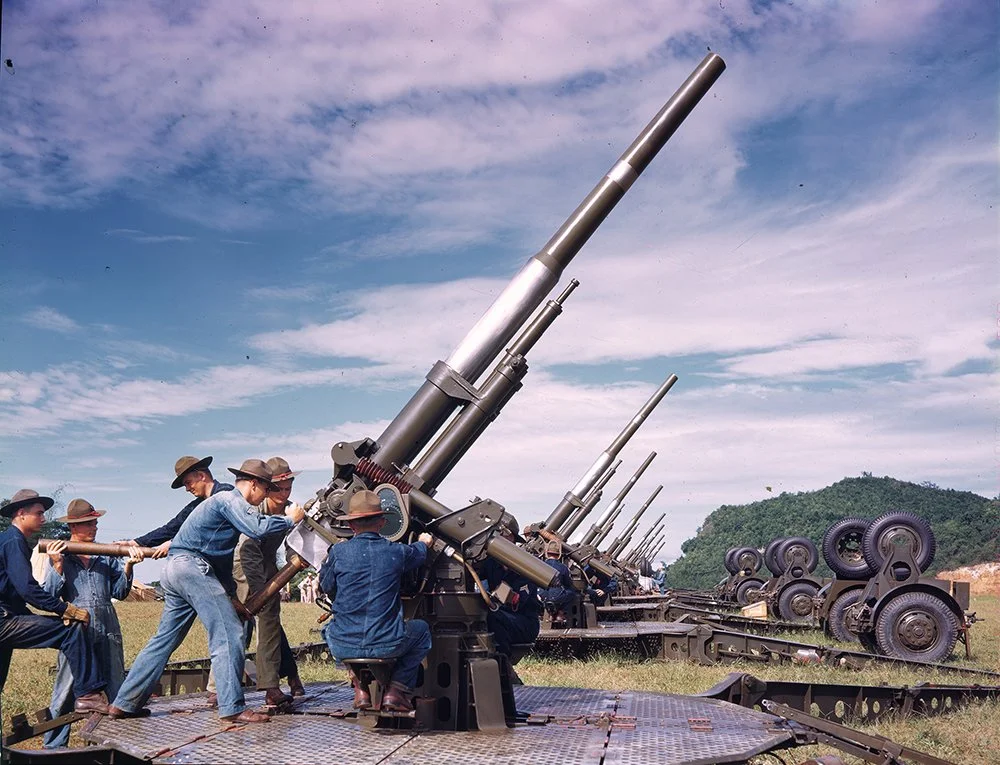
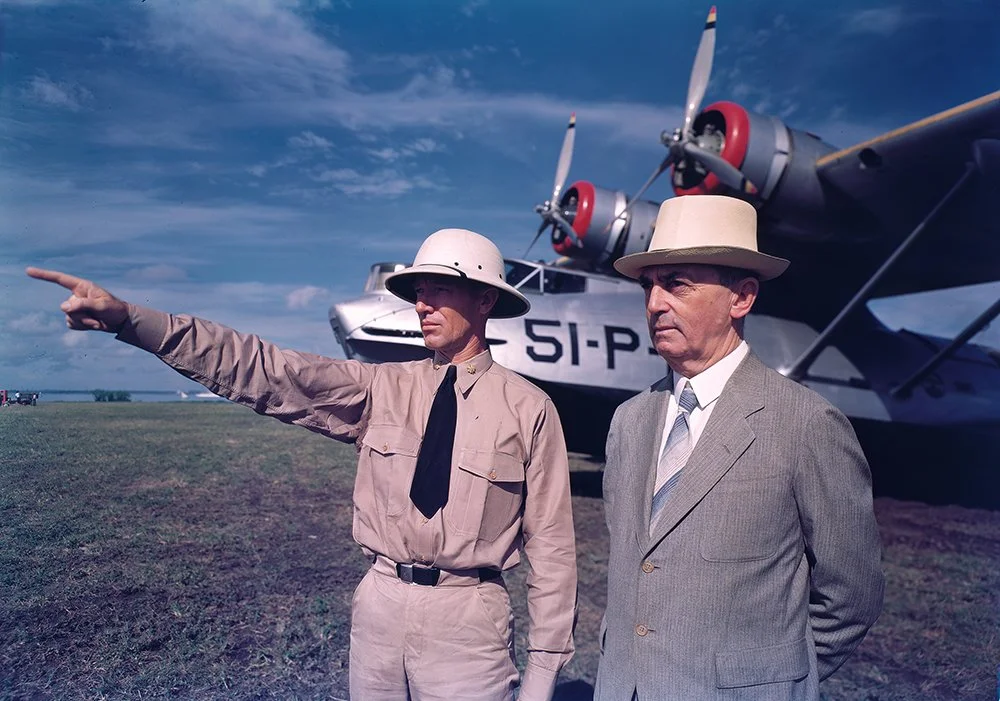
One of the biggest influences of my style is Kodak Kodachrome, particularly the shots from around 1940 (see below). Color film was finally becoming a common reality and Kodachrome gave the world these wonderfully bold colors. Remember, in the 1950s and 1960s TV and movies where proudly announcing themselves as “Now in Color” or “Filmed in Technicolor”. So, in the 1940s photographs with color was a big deal and the images were often staged to showcase the colors that would fill the frame.
It’s really this particular era of Kodachrome that has the biggest influence on me. Actually, I like quite a number of things from the 1940s including the clothing, history, and many of the values of the era.
While I can’t exactly replicate Kodachrome, nor would I want to, there is a feeling I am after that I get from images like these shown below.




Final Thoughts
When trying to find a particular style of photography that you can call your own, look for the feeling you’re after rather than the colors themselves. Find inspiration in everything, not just photography, and see how you can incorporate that into your photos.
Lastly, don’t overlook happy accidents. When I first saw the shot of Yellowstone Lake at the beginning of this article, I was upset that I hadn’t captured the full photo (not realizing that I had on the next frame). But, I kept coming back to it and thinking, “How can I do this on purpose?” Now, that accident is my go-to when I need inspiration for editing photos in the future.