7 Reasons AI will Never Kill Film Photography
AI image generation is becoming more realistic every few months. Soon it will be nearly impossible to tell an AI generated image from a real photograph. But AI will never kill film photography. In fact, it will only make it better.
I was purchasing a record at an antique store the other day (Don Ho’ Hawaii Songs) when an older man said to me, “I remember when CD’s came out. We all thought the records were dead. You couldn’t give them away back then.”
Film photographers experienced the same thing in the early 2000s when digital cameras were on the rise. Free, nearly limitless photos compared to the cost of film. That’s a hard one to beat.
With AI image generation becoming more realistic at such an incredible pace, it will be nearly impossible to tell an AI generated image from a real photograph. But AI will never kill film photography. In fact, it will only make it better.
Here are 7 reasons why I believe film photography will stand the test of time and why AI will only make it better.
1. Film photography is more about the photographer’s experience than the final image
I can already hear people saying, “Hang on a second!” Of course film photographers care about the photo, but ask any film photographer why they shoot film and you’ll never hear them say: “When I absolutely must nail the shot, I shoot film.”
The reason we shoot film is for the experience, and in many cases, the more analog the better.
Film slows us down, makes shots intentional, and involves us more in the process. It’s actually quite inefficient (not to mention expensive) and yet it still persists even in this digital age.
2. AI generates images. Humans take photos.
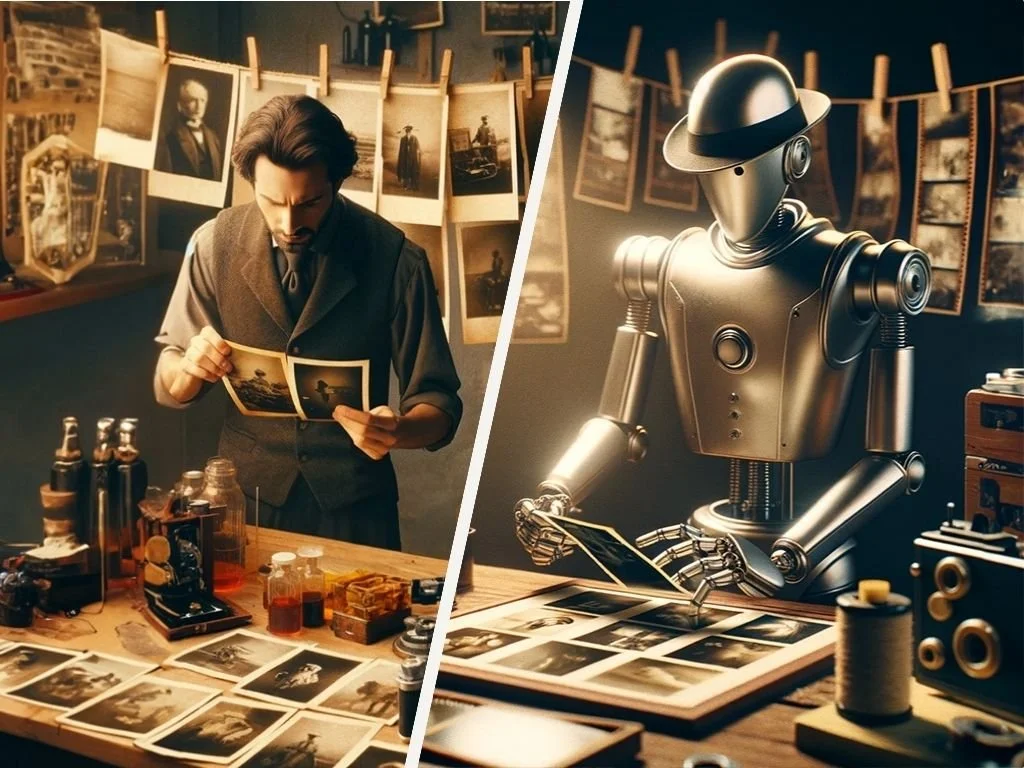
There may come a time in the future, when, like the image for this article suggests, robots also take photos on film. But for the time being, AI will generate images from its vast stores of information, never leaving the confines of its digital habitat. Humans, on the other hand, will walk to places, see sights, take in the feeling of a foggy morning, and capture those memories in a photograph.
There is something which goes beyond an image, however realistic it may be, that we long to connect to. It’s the experience of capturing, of being there, and of putting other aspects of life on hold to make that moment a reality.
3. Every film photo is unique and humans love unique.
Like a fingerprint, a film photo is unique in its own way. Two photographers standing next to one another can take the same shot on the same film and equipment and the photos will each be unique.
The light-sensitive crystals in the film will react differently and while they may capture the same scene, they will each have their own fingerprint. But beyond the technical differences in each photo, each photo is unique because the entire experience is unique. You were there at that moment, capturing that shot.
How many of us have seen a photo that another photographer captured and thought to ourselves, “Man, I wish I had been there to see that!” We know that it is one of a kind and this adds to the excitement we feel for the photos we share and see.
4. AI will make film better (eventually)
The AI we have access to today is very collaborative. If you know a bit about the subject you’re working on, it’s extremely helpful. But, you can’t simply tell it to solve some problem and come back a week later with a solution.
At least, not yet.
But this is the promise of the AI of the future.
“AI, find a cure for this cancer.”
“AI, design a new type of muffler for my old van.”
“AI, bring back Kodachrome.”
You get the idea. At some point AI will make different types of film for us to use. Can you imagine a Polaroid with the clarity of a medium format film?
5. Humans need analog
Seriously. We don’t just like analog as some kind of kitschy throwback that will eventually fade away as most fads do. We need it. We are realizing this more and more. The more we automate and make easy, the more depression and anxiety we have in our society.
We need to be tactile. We need to load the film, experience the shutter click, and decide what that last frame will be on our roll of 36.
6. Film photography creates community
An interest in photography in general creates a community, sure, but film photographers are a rarer breed and we recognize that in each other.
I’ve experienced first hand the difference between meeting someone who only shoots digital vs someone who shoots film.
There are a few things all photographers have in common:
We are always thinking about a different camera to buy
We have a list of places we want to travel to photograph
But there is a spark that I’ve noticed in film photographers that seems to be missing from our digital brethren. It’s a kind of childish delight. There’s no pretention with it and plenty of optimism, curiosity, and enthusiasm for one another.
7. Film challenges us to be better photographers
Film cameras, especially the earlier, manual models, put the control back into the hands of the photographer. Missed focus? That’s on us. Underexposed? That’s us again.
There’s nothing like getting a roll of film developed a few weeks after shooting and realizing you totally missed the shot you most wanted to get right.
As we get better with film photography, we take more pride in our capabilities to be there and get the shot. We also take more pride in the final photos because we know the skill that went into it.
Final Thoughts
Currently, AI is very collaborative and rather than taking jobs it is actually making us more productive. I have no doubt that AI will be used heavily in the media industry but it will never replace the very human experience of capturing our memories onto film.
Analog is the revolution we need and AI will only make us realize that more than ever.